
Staff deepen understanding of MMIWG2S+ crisis
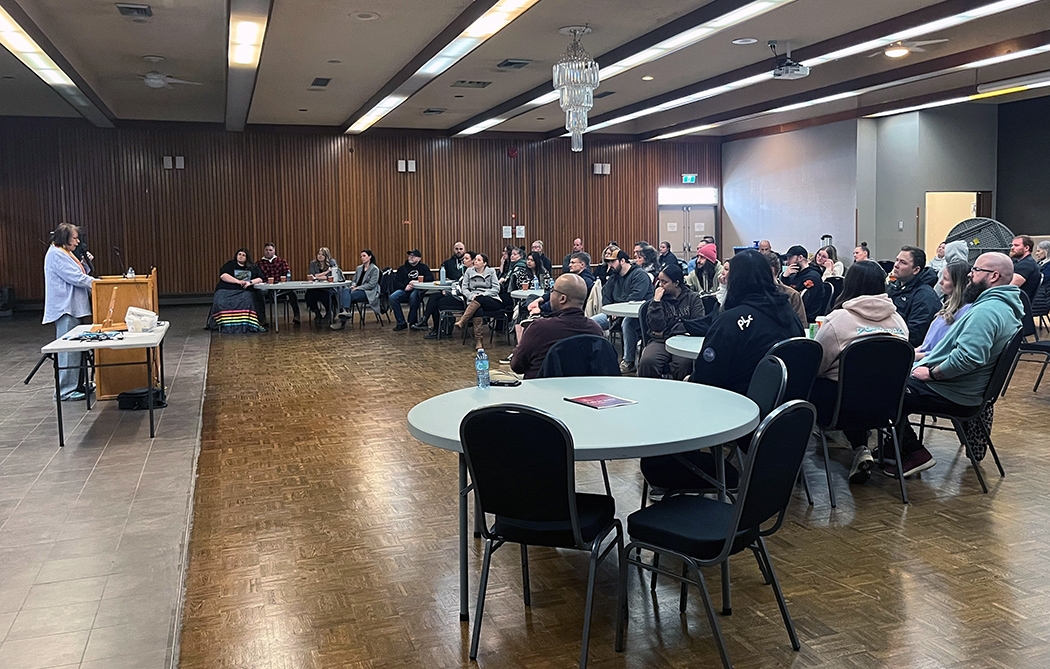
Southern staff had the opportunity to deepen their understanding of Missing and Murdered Indigenous Women, Girls, and Two-Spirit Plus (MMIWG2S+) issues with a special presentation hosted by Knowledge Keeper, educator, and advocate Myrna LaPlante.
Youth care leaders, managers, and a handful of support services staff gathered on April 23 at St. Mary’s Parish Hall in Regina to learn more about MMIWG2S+ and advance their understanding of the crisis and the role they can play to protect and prepare youth in care.
This immersive learning opportunity was arranged by the youth care leaders (YCL) planning committee, composed of Jeanette Duncan, Ryan Wingert, and Stacey Frey, with support from Director Randy O’Shaughnessy and Indigenous Advisor Jamie Lerat.
The presentation was a timely and insightful learning opportunity, as the National Day of Awareness for Missing and Murdered Indigenous Women and Girls (Red Dress Day) will be observed on May 5.
“Staff at Ranch Ehrlo are already doing a lot of great work, and opportunities like this afternoon of learning strengthen cultural competency and support our Indigenous engagement,” Jamie addressed the crowd. “Thank you for coming to learn and to listen. We encourage you to share what you learn within your circles of influence so we can continue to grow our knowledge and deepen our connections.”
Myrna LaPlante, from Day Star First Nation, has extensive experience supporting and advancing awareness of MMIWG2S+ issues, working as an advocate and family information liaison officer with Métis Nation–Saskatchewan.
Myrna’s presentation explored the interconnected nature and systemic impacts of the MMIWG2S+ crisis, spoke about the increased risk to youth in care, and discussed how staff, in their line of work, can help protect youth in care – who are, statistically, at greater risk. She also shared her personal experience of having her aunt go missing, alongside her work coordinating search efforts across Saskatchewan to help bring others’ children home and provide answers for their families.
“When someone goes missing it is terrifying,” she explained, speaking from personal experience. “People stop eating, they stop sleeping. They cannot cope – it’s panic when someone goes missing.”
A group activity during the presentation invited attendees to reflect on how their work at Ranch Ehrlo supports and advances some of the 231 Calls for Justice outlined in Reclaiming Power and Place: The Final Report of the National Inquiry into Missing and Murdered Indigenous Women and Girls. Staff considered their responsibilities within the child welfare system, the importance of collaborative partnerships and consultation with First Nations communities, and the role of family, Elders, and community involvement. They also reflected on ongoing efforts to advance cultural engagement of youth and strengthening identity through the education and integration of languages, traditions, and ceremony.
“The key outcome I hope staff take away from this presentation is a deeper understanding of the MMIWG2S+ community, including the barriers and systemic impacts that influence the work we do,” shared Stacey Frey, co-organizer. “This understanding is essential to supporting respectful, informed, and meaningful engagement with the participants we serve. Additionally, I hope to see continued commitment to, and participation in, ongoing training and educational opportunities for our staff. Expanding opportunities for learning and engagement will strengthen staff buy-in and further enhance our collective capacity to support those in our care.”